Dropouts during calls
Video calls freeze for a few seconds at a time as the satellites pass behind a tree or roofline.
Independent Starlink installers. We are not the Starlink company; we install and set up Starlink systems as a local service.Independent Starlink installers. We are not the Starlink company.Independent Starlink installers. Not the Starlink company.
We are not DISH Network. Booked a Starlink installation through DISH? Please contact DISH directly.We are not DISH Network. DISH installation? Please contact DISH directly.Not DISH Network. DISH install? Contact DISH.

Home/Mount Installation
The mounting location determines how well your Starlink performs. Placing the dish in the wrong spot can cause signal dropouts from trees, rooflines, or nearby buildings.
Starlink Ready TX specializes in Starlink roof, pole, wall, and custom structural mount installations for homes, businesses, barns, RVs, and metal buildings across Central and South Texas—from Austin and Waco to San Antonio, Fredericksburg, Houston, and Corpus Christi.
Trees are the #1 cause of Starlink dropouts in the Hill Country. We check your property for obstructions before we choose a mount.
Is your dish in the right spot?
If any of these sound familiar, the problem usually isn't Starlink. It's where the dish is sitting.
Video calls freeze for a few seconds at a time as the satellites pass behind a tree or roofline.
The Starlink app's obstruction map shows red patches where trees or buildings block part of the sky.
It's sitting on the lawn, a fence post or a table where you tested it, and it gets knocked over or moved.
Speeds drop at certain times of day, or never reach what your neighbors get with the same plan.
A bracket screwed into the roof deck with unsealed holes, or a mount that moves in the wind.
The cable runs across the roof and through a window because the dish ended up far from the router.
 Most common
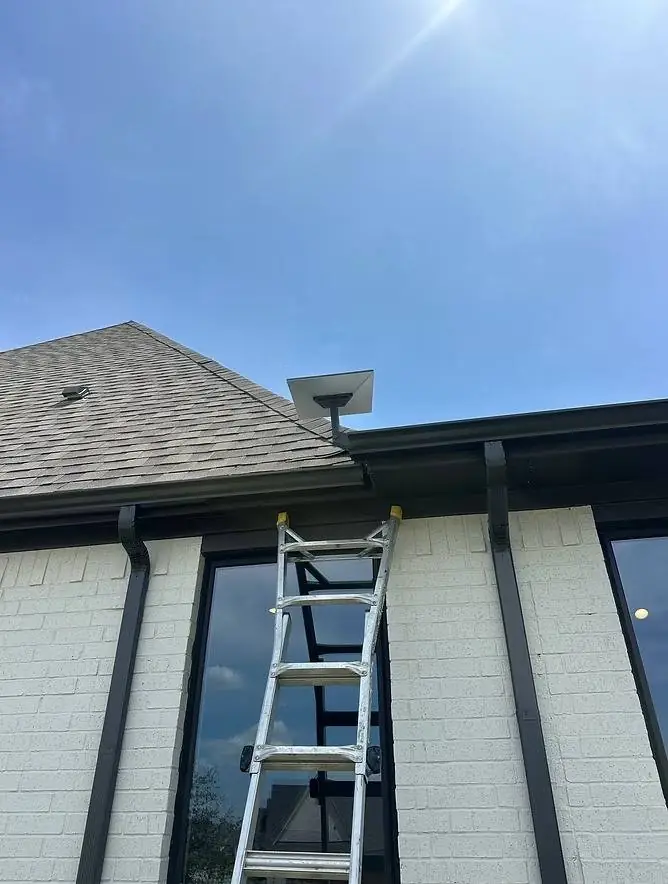
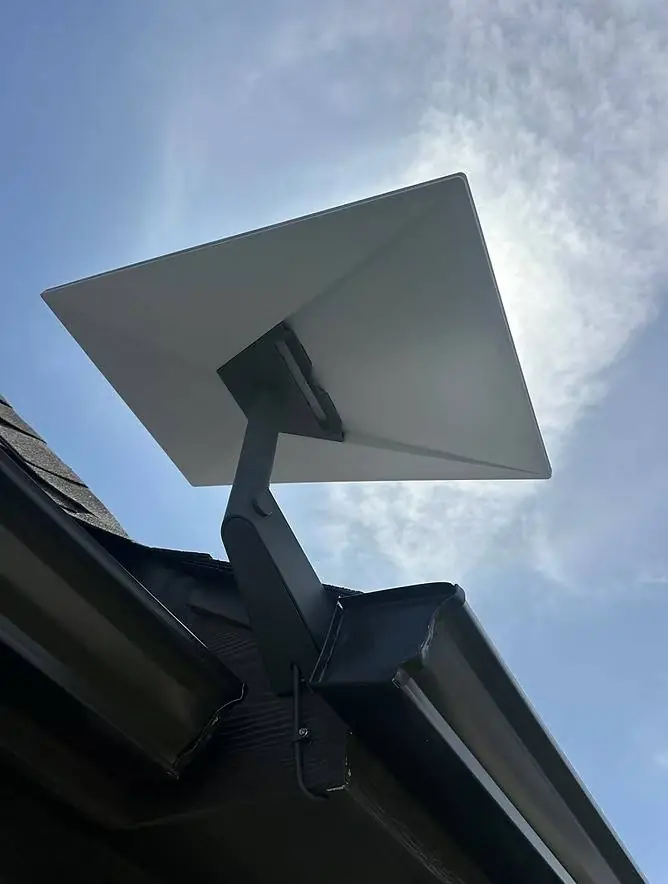
Roof mount
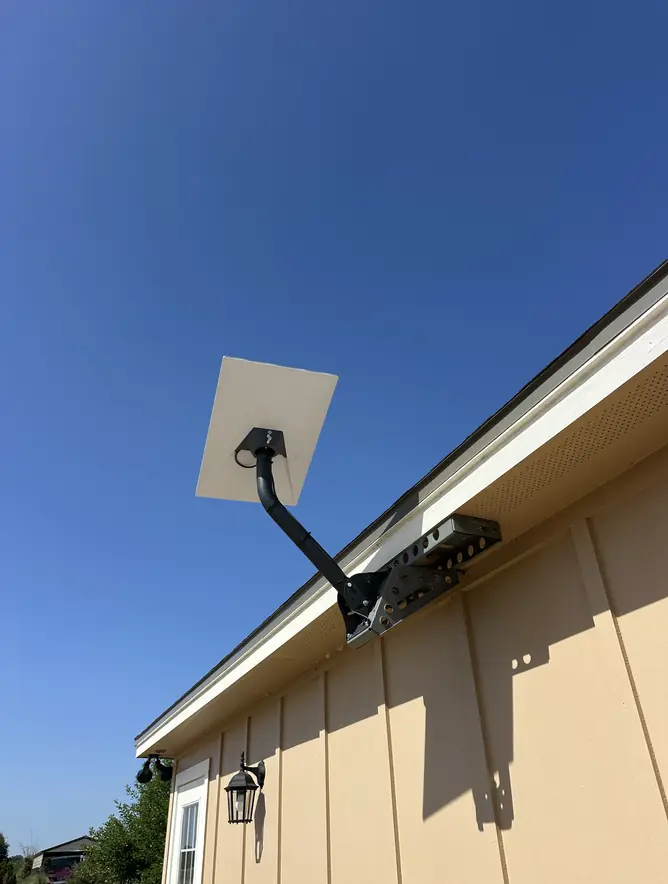
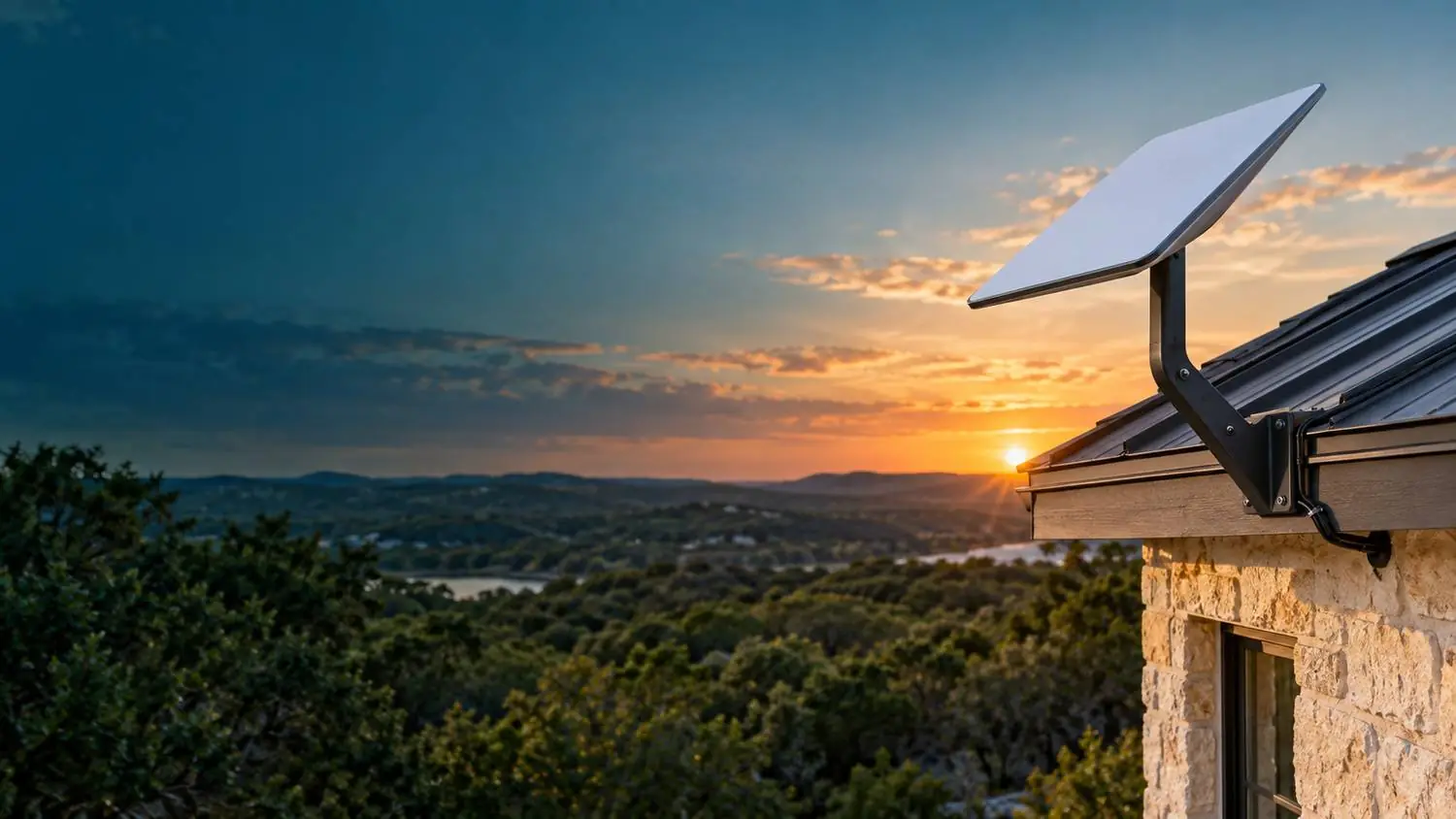
A roof mount is the most common choice for homes with open sky. We install on shingle and metal roofs, place the dish where it has the widest clear view, and seal every penetration so your roof stays watertight. On standing-seam metal roofs we can often use a clamp-on mount with no holes at all.
 Clears the trees
Pole mount
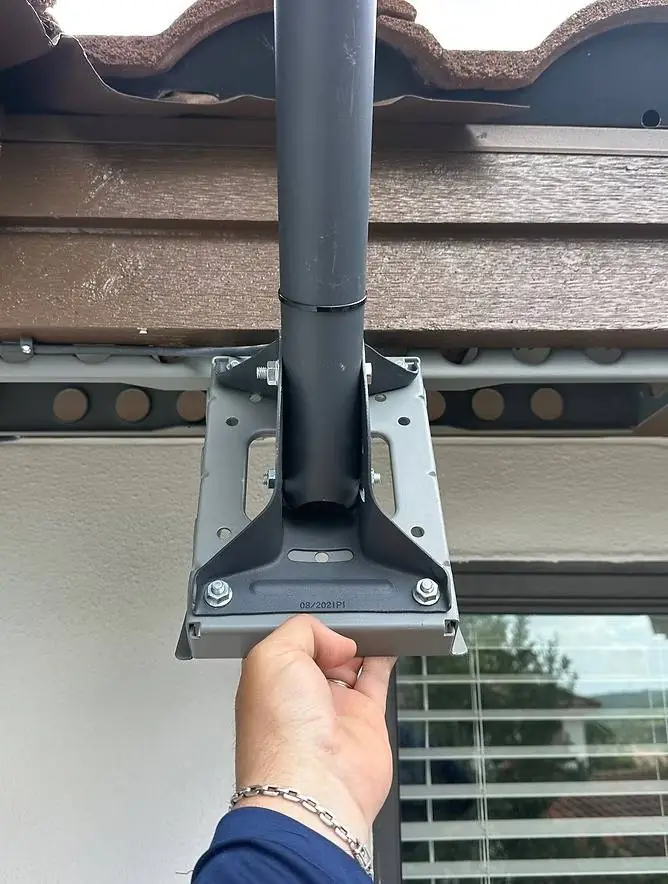
When trees or buildings block the view, a Starlink pole mount is usually the answer. We set the pole in concrete, get the dish up above the obstructions, and run the cable underground or along a protected path back to the house. It's also a good option when you'd rather not put holes in the roof at all.
 No roof holes
Wall mount
A Starlink wall mount works well on gable ends, eaves, barns and metal shop buildings. It keeps the dish off the roof while still clearing the roofline.
Site planning & advanced mounting
Before anything is drilled or mounted, we test for obstructions from the exact spots the dish could go. On large properties we survey several locations and show you the trade-offs: the clearest sky, the shortest cable path and the simplest mount.
Starlink mounting options
| Mount | Best for | Watch out for |
|---|---|---|
| Roof mount | Homes with open sky around them | Needs proper sealing; roof age and material matter |
| Pole mount | Wooded lots, getting above trees, no-roof-holes installs | Needs a trench or protected cable path |
| Wall mount | Eaves, barns, metal buildings | The wall must clear the roofline and nearby trees |
Not sure? You don't have to choose. We'll recommend the best option after the obstruction check.
Roof types
The right mount depends as much on your roof as on the trees around it. Here's how we handle the roofs we see most.
The most common roof on Texas homes. The mount is fastened securely and every penetration is sealed so the roof stays watertight.
We can often use a clamp-on mount that grips the seam, with no holes in the roof at all.
Common on barns and shops. We seal every fastener, or use a wall mount on the building instead.
Tile cracks easily, so we usually recommend a wall or pole mount rather than drilling through it.
Shops and barns often take a wall mount on the gable end, which clears the roofline without touching the roof.
New roofs, heavy tree cover or a roof you'd rather not touch: a pole mount set in concrete out in the open.
Mount day
We check the view of the sky with the Starlink app from the exact spot the dish will sit.
Roof, wall or pole, based on the obstructions, your roof and where the router needs to be.
We install the mount, seal every penetration and route the cable out of sight.
Router placement, app setup and a speed test. Then we leave the site the way we found it.
Most installs take 1 to 3 hours and are finished in one visit. Pole mounts, custom mounts and long cable runs can take longer.
Every install
Every install gets a free, clear quote before any work starts. Get a free quote.
People also ask
The questions people ask most before choosing a Starlink roof, pole or wall mount.
The best place is the highest spot on your property with a clear view of the sky, as close to your router as practical. Check it first with the obstruction tool in the Starlink app, which works before the dish is installed. On an open lot that's usually the roof. With trees around the house, a pole mount above the tree line is usually better.
Ookla medians, Q1 2025. Lower is better: under about 100 ms, video calls and online games feel instant. Starlink's satellites orbit about 340 miles up instead of 22,000, and it only stays that fast with a clear view of the sky.
Your roof material decides whether we drill, clamp or avoid the roof entirely.
| Roof or site | Recommended mount | Holes in the roof? |
|---|---|---|
| Asphalt shingle, open sky | Roof mount | Yes, every one sealed |
| Standing-seam metal | Clamp-on mount | No |
| Exposed-fastener metal (barns, shops) | Roof mount or wall mount | Only sealed fasteners, or none with a wall mount |
| Tile | Wall or pole mount | No |
| Any roof with heavy tree cover | Pole mount set in concrete | No |
Mount questions
No. Starlink needs a clear view of the sky, not a roof. A wall mount or a pole mount works just as well when it clears the trees and buildings around it.
Yes. The Starlink app has an obstruction check that works before the dish is installed. Hold your phone where the dish will sit and it shows how much of the sky is blocked. We run the same check before choosing a mount.
If your roof has a clear view of the sky, a roof mount is usually the simplest and least expensive option. If trees, a taller building or the roofline block part of the sky, a pole mount gets the dish above the obstructions. We decide after the obstruction check, not before.
Not when it's installed properly. Every penetration is sealed so your roof stays watertight, and on standing-seam metal roofs we can often use a clamp-on mount with no holes at all.
Yes. Standing-seam roofs can usually take a clamp-on mount with no holes. On other metal roofs, we seal every fastener.
We usually recommend a wall or pole mount instead of drilling through tile, because tile cracks easily. We'll show you the options after the obstruction check.
Yes. Every job starts with a site survey and line-of-sight check. We test for obstructions from the exact mounting spot before anything is drilled or mounted, and on large properties we compare several spots.
Yes. When a standard mount won't clear the obstructions or suit the building, we install custom structural mounts: taller poles, towers, and roof or wall mounts for unusual surfaces. We recommend one after the site survey and include it in your quote.
High enough to clear the trees and buildings that block your view of the sky. We check the obstructions from the spot the dish will sit, then size the pole to match.
It depends on the mount, your roof and how high the dish needs to go. We check your property first and give you a free, clear quote before any work starts. See how our quotes work.
Call 512-745-6178 for a free quote, or send us a few photos of your property.